


How a Modern Onion Grading Line Transforms Processing Efficiency
- 2026-05-20 /
- Shanna
From the moment onions are harvested to the time they are packed into neat, market-ready packages, a series of complex processes must take place: peeling, washing, grading, and packaging. Traditional manual operations are not only inefficient but often fail to ensure consistent quality. Today, we will explore how a modern onion grading line, powered by full automation, is fundamentally transforming this reality.
What Constitutes a Complete Onion Grading Line?
An efficient onion processing line is not a simple assembly of individual machines. It is an integrated system solution that seamlessly combines multiple functional modules. A typical modern line includes:
-
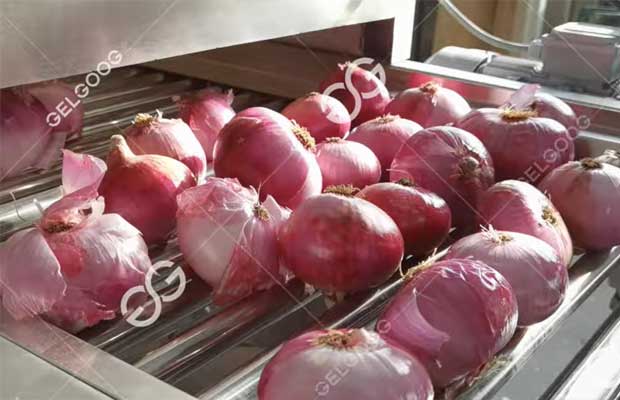
Onion Peeling Unit: Uses specially designed brush rollers combined with high-pressure air to efficiently remove dry outer skins and root residues. A dust collection system keeps the working environment clean.
-
Bubble Washing Unit: Dense bubble clusters penetrate the crevices between onion layers, complemented by overhead sprayers for deep, physical cleaning. A multi-stage filtration and circulation system significantly reduces water consumption.
-
Roller Grader: Employs a modular screen design to sort onions by outer diameter with millimeter-level precision. A unique material guiding system prevents clogging and ensures smooth operation.
-
Automated Packaging Integration: Graded onions can be seamlessly connected to various packaging machines (e.g., mesh baggers, carton packers) for continuous operation from grading to packaging.
Why Invest in an Automated Onion Grading Line?
Real-world data from processing facilities using professional solutions like GELGOOG’s automated lines show significant returns:
-
98%+ grading accuracy
-
85% reduction in labor costs
-
30% increase in yield
-
Proven experience in 50+ countries
Three Core Technical Advantages
1. Precision-Controlled Peeling Technology
Traditional peeling often damages the fleshy layers. Modern equipment features adjustable peeling intensity that automatically adapts to different onion varieties and sizes. This ensures efficient outer skin removal while preserving the fresh texture of the outer layer. A continuous debris collection system automatically cleans impurities without frequent stoppages.
2. Bubble Penetration Washing System
Unlike simple rinsing, bubble washing technology uses a bottom device to generate dense bubble clusters. As bubbles rise, they fully envelop and impact the onion’s surface, effectively separating fine impurities adhering to the gaps between layers. A multi-stage filtration and circulation system significantly reduces water consumption while ensuring uniform cleaning.
3. Wear-Resistant Roller Grading Module
The grading screens are made of special wear-resistant materials, maintaining precise grading apertures over long-term operation. A heavy-duty base and optimized transmission design ensure stable, low-noise operation even at high speeds. The uniform material guiding system effectively prevents clogging, ensuring continuous production.
How to Choose the Right Grading Solution?
When selecting an onion grading line, consider the following:
-
Capacity requirements: How many tons per hour need to be processed?
-
Finished product specifications: How many grades are needed? What are the size ranges?
-
Subsequent packaging form: Mesh bags, cartons, or others?
-
Facility conditions: Available floor space, utilities, etc.
Professional equipment suppliers will provide customized solutions and may even conduct on-site material testing to ensure your return on investment.
Conclusion
A modern onion grading line is no longer a simple set of mechanical devices. It is a comprehensive solution integrating mechanical design, fluid dynamics, and automation control. It dramatically improves processing efficiency and finished product quality while significantly reducing labor dependence and operational costs. If you are planning or upgrading an onion processing facility, exploring this mature technology is a worthwhile step.
Technical data referenced from professional equipment supplier GELGOOG. Visit the Onion Sorting and Grading Line product page for detailed specifications.