


Industrial Vegetable Washing & Dehydration Lines 300kg/h+
- 2026-06-25 /
- Shanna
Clean, Dry, and Ready in One Continuous Flow
If you're running a central kitchen, food processing plant, or fresh-cut operation, you know the drill: washing vegetables by hand is slow, inconsistent, and expensive. An industrial vegetable washing and dehydration line changes that completely.
What does 300kg/h actually mean for you? It means roughly 300 kilograms of clean, dry vegetables every single hour – enough to supply a mid-sized salad production facility, a large staff canteen serving thousands of meals daily, or a food distribution center handling bulk orders.
This isn't just a bigger machine. It's a complete system that takes your raw vegetables from soil-covered and dripping wet to thoroughly cleaned, surface-dried, and ready for the next processing stage – whether that's cutting, freezing, blanching, or retail packaging.
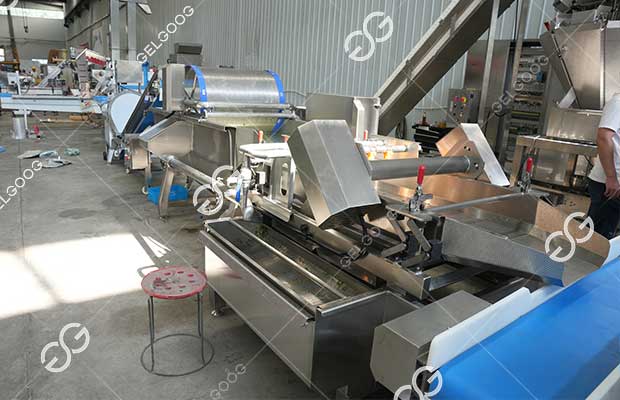
The line typically combines bubble washing technology (where air bubbles gently tumble vegetables to dislodge dirt and pesticide residues) with centrifugal dehydration (where high-speed spinning removes surface water without heat). The result? Vegetables that are clean, hygienic, and shelf-stable for longer.
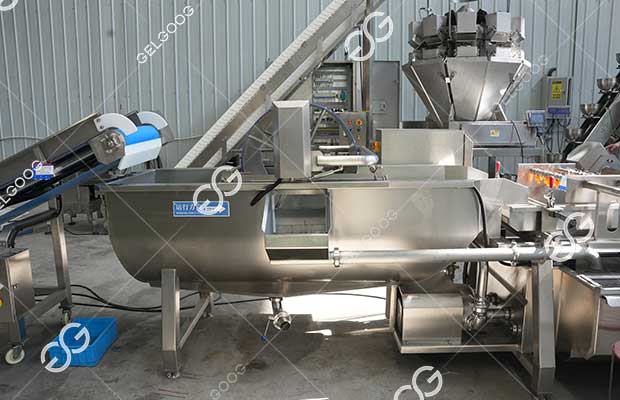
Key Specs at a Glance
| Parameter | Typical Range |
|---|---|
| Capacity | 300–500 kg/h (scalable to 5000kg/h+) |
| Material | Food-grade SUS304 stainless steel |
| Power | 1.1–3.37 kW depending on configuration |
| Voltage | 380V / 50Hz |
| Construction | Corrosion-resistant, meets export food hygiene standards |
| Control | PLC automated with optional remote monitoring |
Pros & Cons – A Realistic Look
Every piece of equipment has trade-offs. Here's what you need to know before investing.
✅ Pros
1. Labor savings that add up fast
A 300kg/h line replaces what would take 5–8 manual workers doing the same job. At an average labor cost of $15–20/hour, that's **$600–$1,280 saved per 8-hour shift**. Over a year, we're talking $150,000+ in labor reduction alone.
2. Water savings of up to 80%
The recirculating water filtration system reuses cleaning water across multiple wash cycles. For a facility processing 2,400 kg per day (one 8-hour shift), that's roughly 7,200 liters of water saved daily compared to traditional washing methods.
3. Pesticide removal you can count on
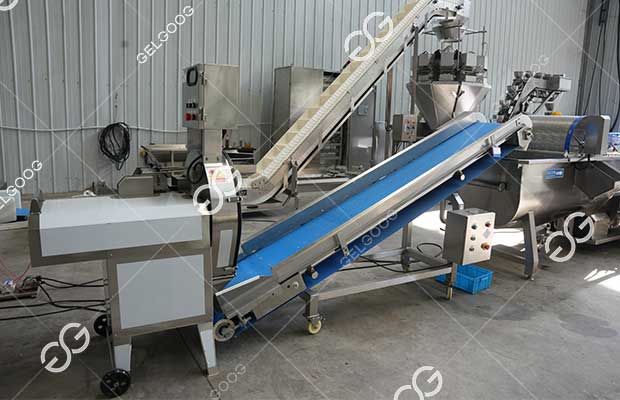
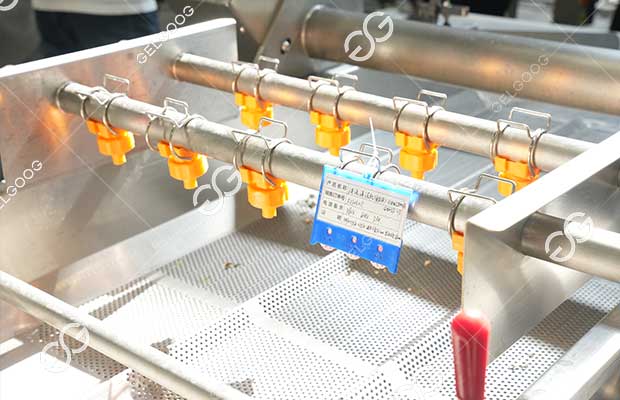
Multi-stage systems combining bubble action, high-pressure spraying, and optional ozone sterilization can remove up to 99% of surface pesticide residues. That's the difference between "visually clean" and "food-safety compliant."
4. Consistent, repeatable results
PLC automation means every batch gets the same wash time, water pressure, and dehydration speed. No more "Monday morning batch looks different from Friday afternoon batch."
5. Longer shelf life
Proper dehydration removes surface moisture that fuels bacterial growth. Products stay fresher longer, reducing spoilage and waste.
❌ Cons
1. Significant upfront investment
A complete 300kg/h line typically costs $20,000–$50,000+ depending on configuration and customizations. This is a capital expenditure that requires ROI planning.
2. Space requirements
Expect to allocate 15–25 square meters of floor space for a full line, plus additional clearance for maintenance access.
3. Learning curve for operators
While automation simplifies daily operation, your team needs training on PLC controls, maintenance protocols, and troubleshooting. Budget 2–3 days of training and ramp-up time.
4. Not a one-size-fits-all solution
Different vegetables require different settings – leafy greens need gentler handling than root vegetables. You'll need to dial in your specific configurations.
5. Maintenance costs
Regular cleaning of nozzles, filters, and the dehydration drum is essential. Factor in $200–$500 monthly for consumables and preventative maintenance.
Who Is This For? (Core Application Scenarios)
This equipment isn't for everyone – but if you fit any of these profiles, it's probably exactly what you need.
Food Processing Plants
Producing frozen vegetables, canned goods, or dehydrated products? A washing and dehydration line is the entry point to your entire production process. With the fruit and vegetable processing equipment market projected to reach $12.75 billion by 2035 (growing at 6.45% CAGR), now is the time to scale.
Fresh-Cut Salad & Ready-to-Eat Producers
Leafy greens and mixed salads demand gentle handling. Bubble washing won't bruise lettuce or spinach, and centrifugal drying removes water without applying heat that could wilt delicate leaves.
Central Kitchens & Large-Scale Catering
Serving 5,000+ meals daily? Your vegetable prep needs to be efficient and consistent. A 300kg/h line handles the volume while maintaining food safety standards.
Food Distribution Centers
Supplying restaurants, supermarkets, or institutions? Pre-washed, pre-dried vegetables reduce weight (saving shipping costs) and extend shelf life (reducing returns and waste).
Restaurant Chains with Centralized Prep
If you're consolidating prep for multiple locations, this line gives you quality control and economies of scale that individual store-level prep can't match.
FAQ – Frequently Asked Questions
Q1: What vegetables can this line process?
A: The line handles a wide range – leafy greens (lettuce, spinach, cabbage), root vegetables (carrots, potatoes, beets), and even delicate produce like tomatoes and peppers. Different settings accommodate different textures and fragility levels.
Q2: How does the dehydration work without damaging vegetables?
A: Centrifugal dehydration spins vegetables at high speed to remove surface water – not internal moisture. The vegetables are gently pressed against the drum wall by centrifugal force, not crushed or squeezed. This preserves texture and nutritional quality while removing the water that causes spoilage.
Q3: What's the difference between 300kg/h and larger capacities?
A: 300kg/h is the sweet spot for mid-size operations. It's enough capacity to justify automation without over-investing in equipment you don't yet need. Most manufacturers offer scalable models from 100kg/h up to 5000kg/h, so you can upgrade as you grow.
Q4: Is installation difficult?
A: Most suppliers provide installation support and on-site training. The line arrives in modular sections and is assembled on-site. You'll need appropriate electrical (380V three-phase) and water connections.
Q5: What about food safety compliance?
A: Food-grade SUS304 stainless steel construction meets international food safety standards. Optional ozone sterilization systems add an extra layer of pathogen control.
Q6: How much water does it use?
A: The recirculating system saves approximately 80% of water compared to single-pass washing. A 300kg/h line typically uses 500–1,000 liters of fresh water per hour, with the rest recirculated and filtered.
Q7: How long does it take to pay back the investment?
A: Most operators see ROI within 12–24 months through labor savings alone. Add water savings, reduced waste, and improved product quality, and the payback period often shortens further.
Q8: Can I customize the line?
A: Yes. Most manufacturers offer customizable configurations – add or remove modules like peelers, cutters, or blanching units depending on your needs.
Final Thoughts
An industrial vegetable washing and dehydration line at 300kg/h+ capacity isn't just a machine – it's a fundamental upgrade to how you process vegetables. It replaces inconsistent manual labor with automated precision, cuts your water bill, extends product shelf life, and gives you the capacity to grow your business.
The global washing and dewatering equipment segment already holds 33.3% of the fruit and vegetable processing market – and that share is growing. If you're still washing vegetables by hand or with outdated equipment, you're leaving money, time, and quality on the table.
Ready to scale your vegetable processing operation? Contact us today to discuss your specific capacity requirements, vegetable types, and facility constraints. We'll help you configure a line that fits your needs – and your budget.